
30 Jun The Role of the Montessori Directress: A Guide and Observer
The Montessori directress’s role extends beyond teaching academic concepts. These specialised educators create carefully designed spaces with hands-on materials that spark independent exploration. They dedicate significant time to observing students interacting with their surroundings, providing personalised instruction based on each child’s unique needs and learning pace. What truly sets them apart is their “preparation of spirit” – their values, beliefs, and self-awareness – before they step into the classroom to serve the children.
What Makes a Montessori Directress Unique
The term “directress” itself reveals a deep philosophical difference. Dr. Maria Montessori chose this title to describe an educator who guides children to discover rather than following a fixed curriculum. This marks a fundamental shift from traditional teaching.
A Montessori directress completes further training beyond regular teacher qualifications, learning to prepare themselves spiritually for the classroom. They understand that their behaviour becomes part of the environment children absorb.
In practice, the directress serves as:
- An observer who watches each child’s development and knows when to introduce materials or step back
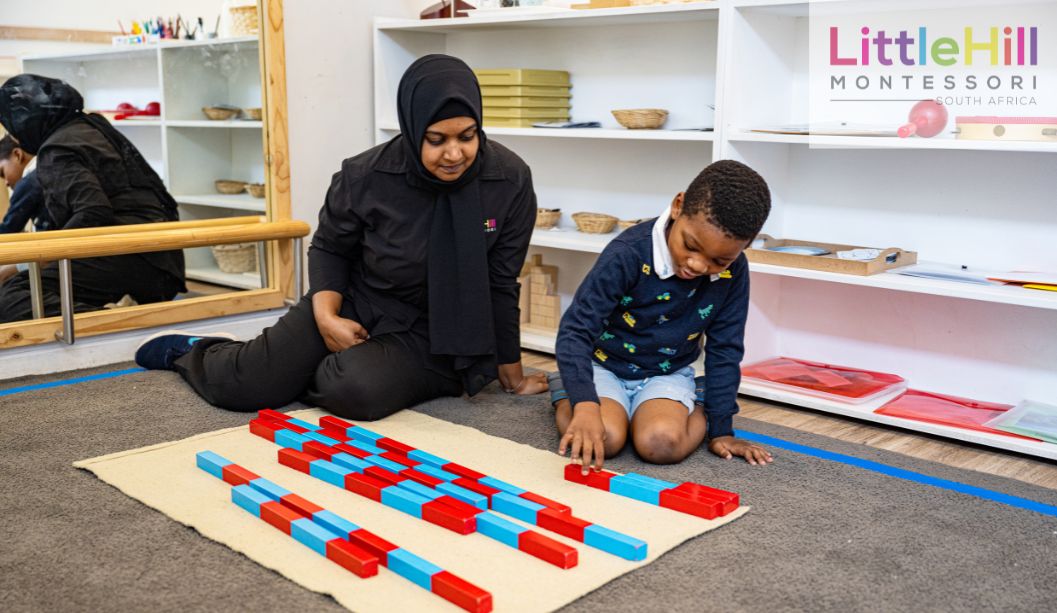
- A preparer of environments that foster independence, concentration, and curiosity
- A guide who channels children’s energies toward growth
Montessori directresses never interrupt a focused child, even during repetitive activities. This respect for concentration forms the heart of Montessori education. Their three-year relationships with students allow a deep understanding of each child’s learning style and developmental needs.
The directress functions as “the dynamic link” between a child and the prepared environment. Success looks different here at LittleHill Montessori: The greatest sign of success for a directress is to be able to say, ‘The children are now working as if I did not exist.’
How the Directress Facilitates Learning
The directress employs distinctive techniques that differentiate Montessori education. She observes each child to understand their needs and readiness before taking action.
One-on-one material presentations during work cycles are conducted with slow, precise movements and minimal words. The directress shows rather than explains, allowing materials to communicate their purpose. She introduces new concepts based on the child’s readiness, developmental stage, and mastery of prerequisites.
After presentations, she purposefully steps back, giving children space to work independently.
Building a Respectful and Peaceful Classroom
Peace forms the foundation of a Montessori classroom. The directress creates a culture where children develop “joyful obedience” . The “triangle of respect” – respect for oneself, others, and the environment – guides all interactions.
Grace and courtesy lessons hold equal importance to academic subjects.
Most classrooms include a “peace corner” where children solve conflicts independently. Mixed-age classrooms allow older children to model respectful behaviour while developing leadership skills. The directress observes these interactions, stepping in only when necessary to guide rather than control.
Growing Beyond the Classroom
When you peek into a Montessori classroom, you’ll see directresses who don’t just teach—they guide little hands and then step back, letting curiosity take the lead. Their journey begins with heart-centred training long before they meet your child.
The classroom becomes a cosy community where children learn to respect themselves and care for others.
That’s the Montessori difference that continues to flourish long after preschool ends.