
28 Jun How to Support Your Child’s Montessori Learning at Home: A Comprehensive Guide
The Montessori approach has become a beacon of innovative child-led learning in the educational sphere. This popular method encourages children to explore and learn at their own pace, in their own way. Incorporating Montessori principles into your home can provide a nurturing environment that fosters your child’s natural curiosity and love of learning.
In this comprehensive guide, we will explore five ways you can support your child’s Montessori learning at home.
1. Embrace Montessori Principles
Understanding the Montessori Method
To effectively support your child’s Montessori learning at home, understanding the core principles of the Montessori method is crucial. Established over a century ago by Italian physician and educator, Dr. Maria Montessori, the method is grounded in respect for the child’s natural developmental stages. Montessori education encourages children to learn through active, sensory-based experiences, fostering their independence and self-confidence.
Role of the Parent in Montessori Learning
As a parent, your role is to provide an environment that enables your child to explore and learn independently. This means creating a home environment that is safe, stimulating, and child-friendly. Providing a variety of age-appropriate materials and activities is essential, as is respecting your child’s natural pace of learning.
2. Incorporate Practical Life Activities
What are Practical Life Activities?
Practical life activities are everyday tasks that foster independence and self-care. These activities are a key component of Montessori learning and include tasks such as dressing, cleaning, cooking, and gardening. Practical life activities help children develop fine motor skills, hand-eye coordination, and an understanding of sequence and order.
Implementing Practical Life Activities at Home
To implement practical life activities at home, start by observing your child’s interests and abilities. Provide opportunities for them to participate in daily household chores, such as setting the table, sweeping the floor, or watering plants. Remember, the goal is not to have the task completed perfectly but to allow your child to develop skills and gain confidence through practice.
3. Create a Montessori-Friendly Environment
Importance of a Montessori-Friendly Environment
A Montessori-friendly environment is designed to support your child’s natural desire to learn. This includes creating a space where children can access learning materials independently, and where their discoveries can be respected and encouraged.
Tips for Creating a Montessori-Friendly Home
To create a Montessori-friendly home, ensure that your child’s environment is safe, accessible, and engaging. This might involve arranging furniture at your child’s height, having low shelves for toys and materials, and creating quiet spaces for concentration and rest. Consider incorporating natural elements and a variety of textures to stimulate your child’s senses.
4. Introduce Montessori Materials
What are Montessori Materials?
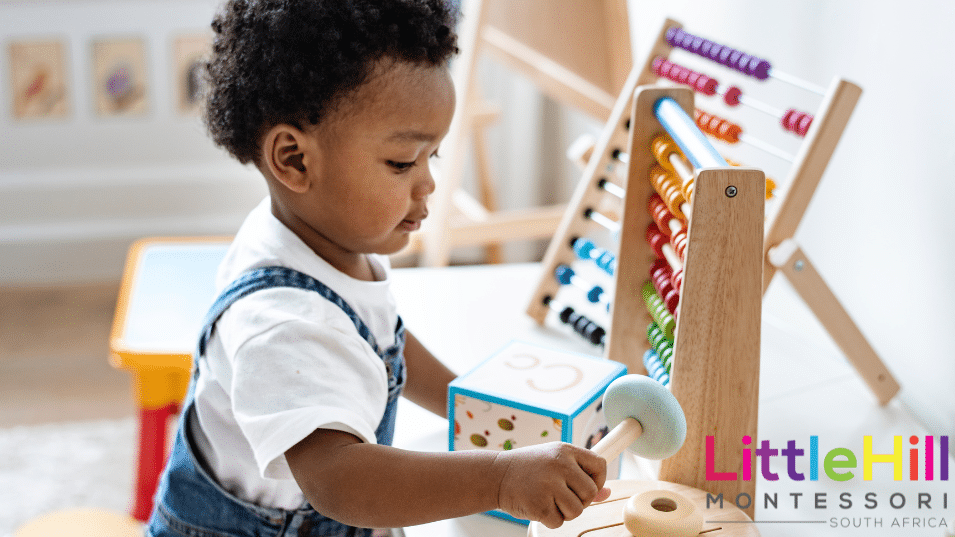
Montessori materials are specially designed learning tools that foster independent exploration. These materials, which cover areas such as sensorial exploration, language development, and mathematics, are self-correcting, meaning that children can learn from their mistakes without adult intervention.
Choosing Montessori Materials for Home
When choosing Montessori materials for home use, consider your child’s age, interests, and developmental stage. While it’s not necessary to replicate a full Montessori classroom, having a selection of key materials can greatly enhance your child’s learning experience. These might include sensory materials like the pink tower or colour tablets, language materials like sandpaper letters, or mathematics materials like bead stairs.
5. Foster a Love of Learning
Encouraging Curiosity and Exploration
Fostering a love of learning is at the heart of the Montessori approach. This involves encouraging curiosity and exploration and valuing the process of learning over the end result. Providing opportunities for free play, outdoor exploration, and creative expression can help cultivate a lifelong love of learning.
Supporting Your Child’s Interests
Following your child’s interests is another key aspect of Montessori learning. By observing your child and noting their interests, you can provide materials and activities that align with their curiosities. Whether your child is fascinated by dinosaurs, enjoys creating art, or loves to explore the natural world, supporting their interests can make learning an exciting and meaningful adventure.
Remember, the goal of Montessori education is not to accelerate academic achievement, but to foster a lifelong love of learning, independence, and respect for the child’s natural development. With patience, consistency, and respect for your child’s unique learning journey, you can successfully support your child’s Montessori learning at home.